Valorizing Fiber and Starch Streams from Pulse Protein Processing
In a pulse protein isolate plant, the protein line gets the capital, the attention, and the daily operating pressure. Fiber and starch streams are often treated as secondary outlets: move them, thicken them, dry them if the economics allow, or dispose of them when they do not.
That view leaves value on the floor.
For pea, lentil, and chickpea fractionation, co-products are not just a revenue question. They influence slurry viscosity, separation load, water handling, dryer demand, wastewater balance, and the amount of downtime required to keep the line moving. The right enzyme strategy can help stabilize those streams so the plant has more options than bulk feed, low-margin drying, or disposal.
Enzymepulse supplies process enzymes, wholesale and in bulk, to pulse protein manufacturers and to the ingredient companies that buy their fibre and starch fractions. We work inside your existing tanks, residence time and pH and temperature windows, because the protein line cannot be put at risk for a side project. To discuss a side-stream trial, send the stream type, the quantity and the destination through the quote form.
Why co-product streams deserve process attention
Pulse fractionation generates side streams with meaningful solids, but those solids are rarely simple. Fiber-rich and starch-rich fractions can carry residual protein, gums, hull fragments, fine particles, salts, and process water. Their behavior shifts with crop variety, milling profile, extraction conditions, and upstream separation performance.
For plant teams, the issue is usually not whether the stream has value in theory. The issue is whether it behaves consistently enough to recover value without creating new operating problems.
Common pain points include:
- Variable slurry viscosity that affects pumping and heat transfer
- Wet fiber cakes that resist dewatering and increase drying load
- Starch-rich fractions that settle, gel, or foul equipment unpredictably
- Side streams that dilute plant water balance and increase treatment burden
- Co-products that miss consistency requirements for higher-value buyers
- Trial programs that interfere with protein recovery or line availability
Enzymes are useful when they are applied to a defined process outcome, not as a generic additive. The target may be lower viscosity, cleaner phase separation, improved water release, more consistent solids handling, or preparation of a starch stream for downstream conversion.
Fiber streams: from difficult wet cake to controllable material
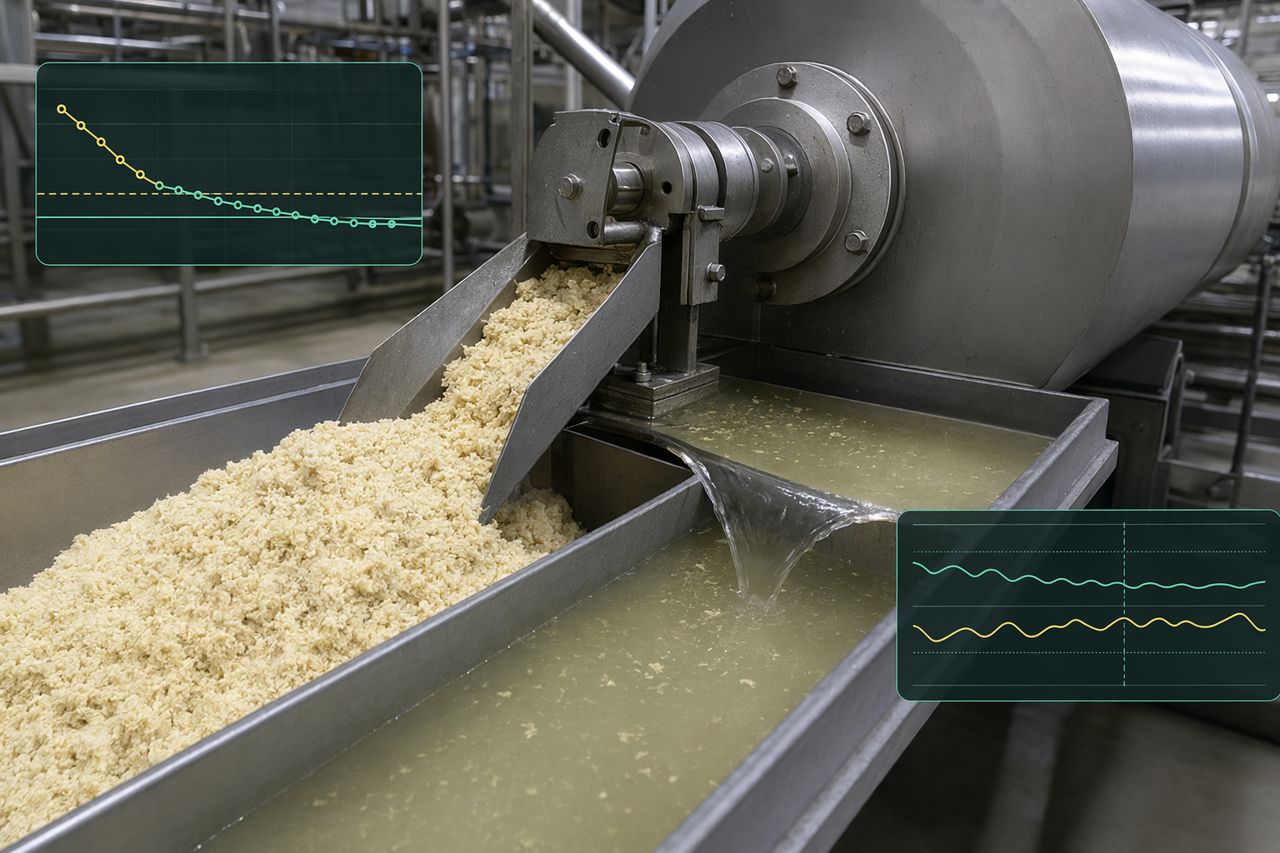
Fiber streams from pulse processing can contain insoluble cell wall material, soluble carbohydrates, entrained starch, and residual protein. That mix can hold water tightly and create a bulky stream that is expensive to dry and hard to standardize. Enzymes that act on cell wall polysaccharides, such as hemicellulase, are also used in biomass conversion, and this page covers a hemicellulase supplier for biomass conversion.
A focused enzyme program may help by modifying selected carbohydrate structures that influence water binding and slurry behavior. The goal is not to destroy the fiber fraction. The goal is to make it easier to move, separate, press, dry, or formulate into a defined outlet.
Potential operational outcomes include:
- More predictable viscosity during holding and transfer
- Improved liquid release before thermal drying
- Reduced strain on decanters, presses, or screens
- More stable solids concentration for downstream handling
- A clearer basis for ingredient, feed, or fermentation evaluation
For many plants, the first economic gain is not a premium product claim. It is lower handling friction. If the stream pumps better, dewaters more cleanly, and dries with less variability, the plant has more freedom to choose the best commercial outlet.
Starch-rich streams: preparing for higher-value conversion
Pulse starch streams can be valuable, but they need discipline. Starch-rich fractions may be routed toward native starch applications, fermentation substrates, syrup precursors, or blended ingredient bases. Each route has different requirements for consistency, viscosity, solids level, and residual protein or fiber load.
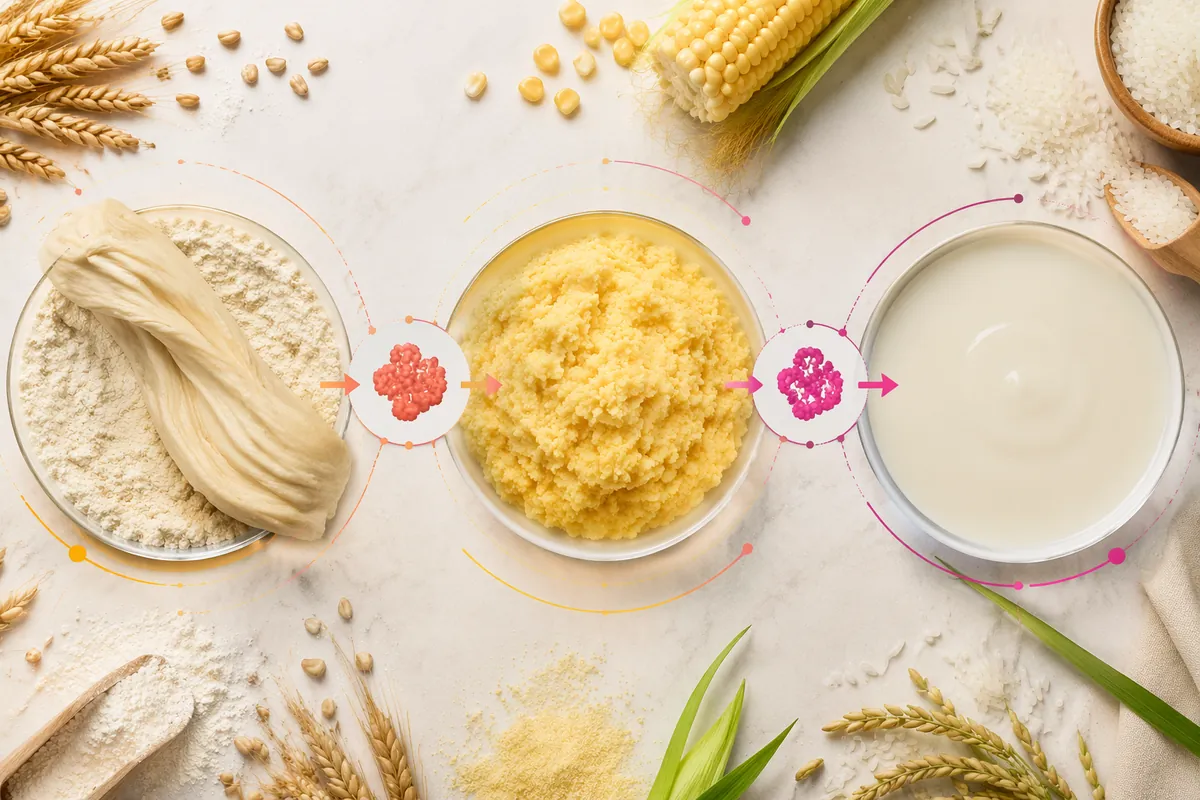
Enzymatic treatment can support controlled conversion where the process objective is clear. In some cases, the aim is to reduce viscosity so a concentrated slurry can be handled more easily. In others, the aim is to prepare fermentable solids or create a more uniform base for further processing.
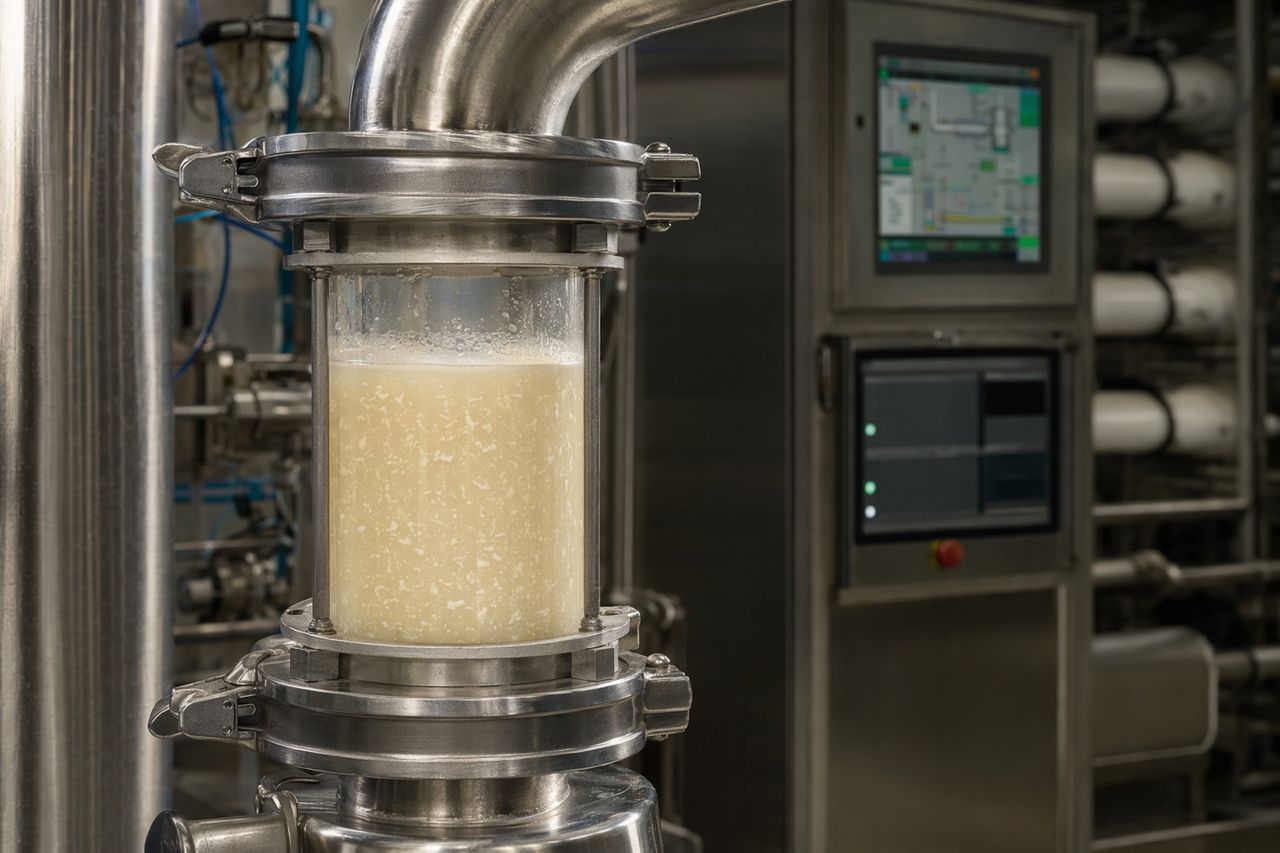
The important decision is where enzyme treatment belongs in the plant sequence. Adding it too early can interfere with protein recovery. Adding it too late may limit contact time or create avoidable heat and transfer costs. The best placement depends on the actual side-stream flow, available hold capacity, pH profile, temperature profile, and separation equipment.
The operational decision: value route before enzyme route
Before selecting an enzyme system, define the intended destination of the co-product. A fiber stream going to feed, a fiber ingredient, fermentation, or energy recovery will not require the same performance profile. A starch stream going to drying, conversion, or sale as a wet intermediate will have different priorities.
A useful evaluation starts with four questions:
- What is the current cost of the stream? Include handling, drying, storage, wastewater load, disposal risk, and downtime.
- What outlet is realistically available? Consider buyer specifications, freight distance, seasonality, and contract consistency.
- What process behavior must improve? Focus on viscosity, dewatering, settling, filtration, solids concentration, or conversion readiness.
- What operating window can the plant actually provide? Work within existing pH, temperature, residence time, tankage, and cleaning constraints where possible.
This prevents the common mistake of testing enzymes against a vague target such as "improve the byproduct." A plant-floor trial should answer a narrower question: can this treatment create a measurable operating improvement under conditions the plant can maintain?
Where enzyme strategy can create buyer value
For B2B buyers, the commercial case for co-product valorization usually sits in a combination of revenue and cost control. Enzymes may contribute to both sides when they improve the physical behavior of the stream.
Better separation efficiency
If a fiber or starch fraction releases water more readily, downstream equipment can operate with less variability. This may reduce recycle loops, slowdowns, or manual adjustments during production shifts.
Lower drying pressure
Drying wet co-products can consume margin quickly. A stream that enters drying with more predictable solids and less bound water is easier to schedule and cost.
More consistent customer specification
Higher-value outlets require repeatability. Enzyme-supported process control can help narrow variation in viscosity, solids behavior, and conversion readiness, making co-products easier to sell under defined terms.
Reduced wastewater burden
When solids are captured and routed more effectively, the plant can reduce the amount of value leaving through water treatment. This is often a hidden economic driver in isolate operations.
More resilient production planning
Co-product instability can force the main line to slow down. Improving side-stream handling can protect throughput by keeping secondary flows from becoming bottlenecks.
Trial design for pulse protein isolate plants
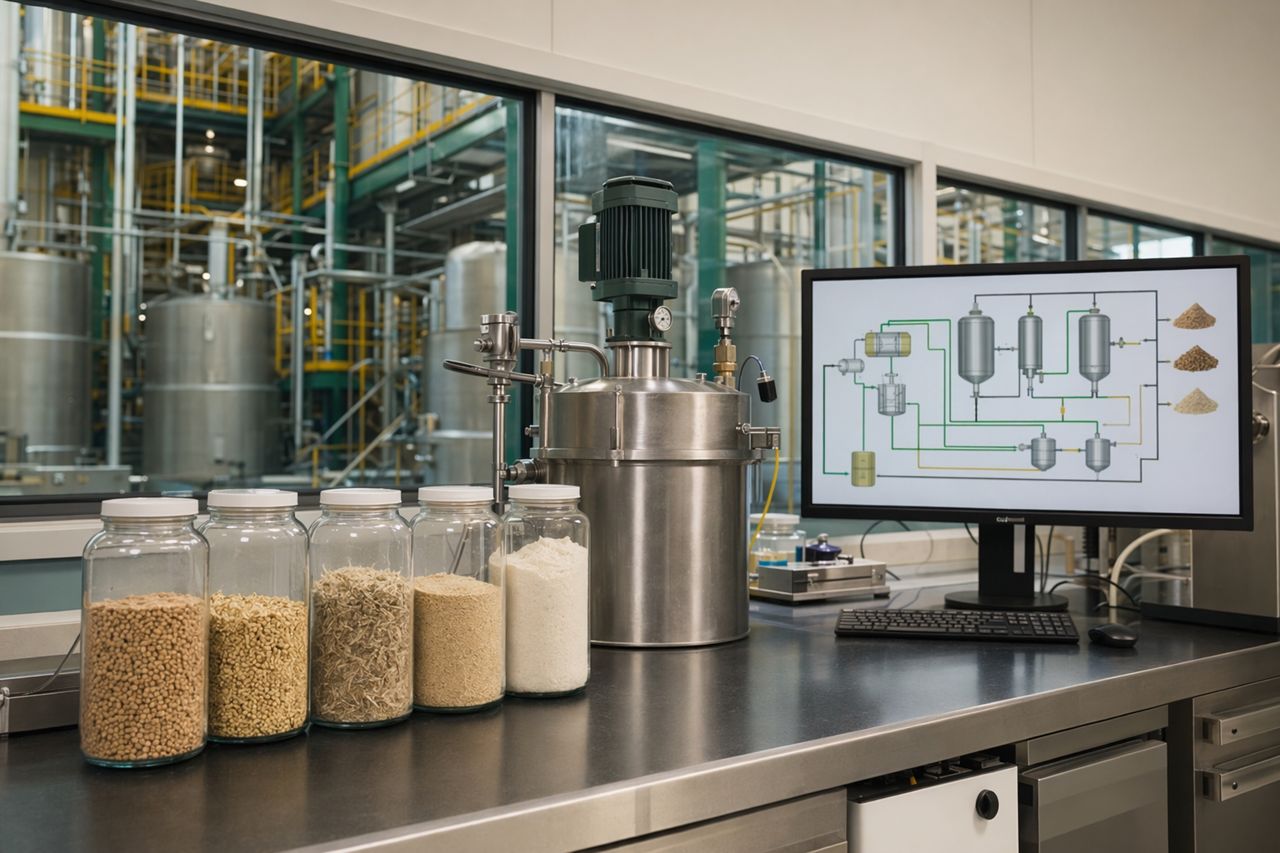
A good co-product enzyme trial should be small enough to control and realistic enough to scale. The trial should use actual plant material, not a simplified substitute, because pulse side streams change with raw material and upstream settings.
Enzymepulse typically frames evaluation around:
- Stream identity: fiber-rich, starch-rich, mixed, or post-separation side flow
- Current process pain: viscosity, dewatering, settling, fouling, drying load, or outlet inconsistency
- Available process window: pH, temperature, hold time, mixing, and equipment access
- Separation target: decanter behavior, screen performance, press response, membrane load, or centrifuge clarity
- Commercial target: feed, ingredient, fermentation base, starch route, or internal cost reduction
- Scale-up controls: sampling points, hold conditions, line impact, and decision thresholds
The decision threshold matters. A trial should not continue just because the chemistry is interesting. It should continue because the stream behaves better in a way that supports plant economics.
Protecting the protein line
Co-product projects should not compromise protein recovery, isolate quality, or main-line uptime. That is why enzyme placement is a core engineering decision.
In many plants, the safest starting point is after the primary protein separation step, where the side stream can be treated with less risk to the main product. In other cases, a controlled upstream intervention may be justified if it improves separation without damaging yield or quality. The correct answer depends on the plant.
The guiding rule is simple: protect the protein business first, then build co-product value around stable operations.
A practical path to valorization
Co-product valorization does not need to begin with a full new product launch. It can begin with a better-handling stream.
A staged approach often works best:
- Stabilize the stream. Improve pumpability, separation, or water release.
- Reduce avoidable cost. Lower drying pressure, wastewater load, or downtime risk.
- Define a commercial outlet. Match the treated stream to realistic buyer or internal-use requirements.
- Scale only what holds. Move forward when the process behavior is repeatable across raw material variation.
This approach fits the way pulse protein plants actually operate. It keeps the main line protected while building a stronger business case for fiber and starch streams.
Request a quote
For pulse protein manufacturers, side-stream buyers and ingredient resellers evaluating fibre, starch or mixed side-stream value: Enzymepulse supplies process enzymes wholesale and in bulk, with a trial defined around your operating window and commercial target.
Use the form below and include the stream type, the current process problem, the outlet you have in mind, the quantity you expect to treat and the destination. Pricing is quoted per order.