Enzyme Supplier for Pulse Protein Processing Plants
Hilum Process Co. supports pulse protein isolate plants that need enzyme supply tied to plant-floor outcomes, not generic ingredient claims.
For pea, lentil, and chickpea operations, enzyme selection can influence how hydrated flour behaves in slurry, how solids separate, how downstream clarification runs, and how consistently protein moves through the process. Our role is to help your team source enzyme solutions that fit your raw material, process window, and production constraints.
If you are evaluating an enzyme supplier for pulse protein processing, we focus on practical plant questions: What is limiting throughput? Where is viscosity building? Which separation step is carrying too much load? What trial plan gives your team useful data without disrupting the line?
Request a quote for an enzyme supply discussion tailored to your pulse protein isolate process.
Enzyme sourcing built around isolate plant realities
Pulse protein plants do not run on ideal raw material. Crop year, variety, flour particle size, hydration behavior, starch carryover, fiber content, and antinutritional components can all change how the line behaves.
Hilum Process Co. works with enzyme categories commonly considered in pulse protein processing, including targeted carbohydrase and protease approaches, depending on the process objective. The purpose is not to add complexity. The purpose is to make slurry handling, fractionation, and separation more predictable.
Typical operational targets
- Improve slurry flow during hydration and extraction
- Reduce viscosity that limits pumping, mixing, or heat transfer
- Support cleaner protein-starch-fiber separation behavior
- Improve decanter, centrifuge, or membrane-side consistency
- Reduce load on filtration or clarification steps
- Stabilize yield across variable pulse inputs
- Support shorter, cleaner production trials with measurable outcomes
Where enzymes may create value in pulse protein isolation
Every plant layout is different, but enzyme trials often begin where the process shows repeatable friction.
Hydration and slurry preparation
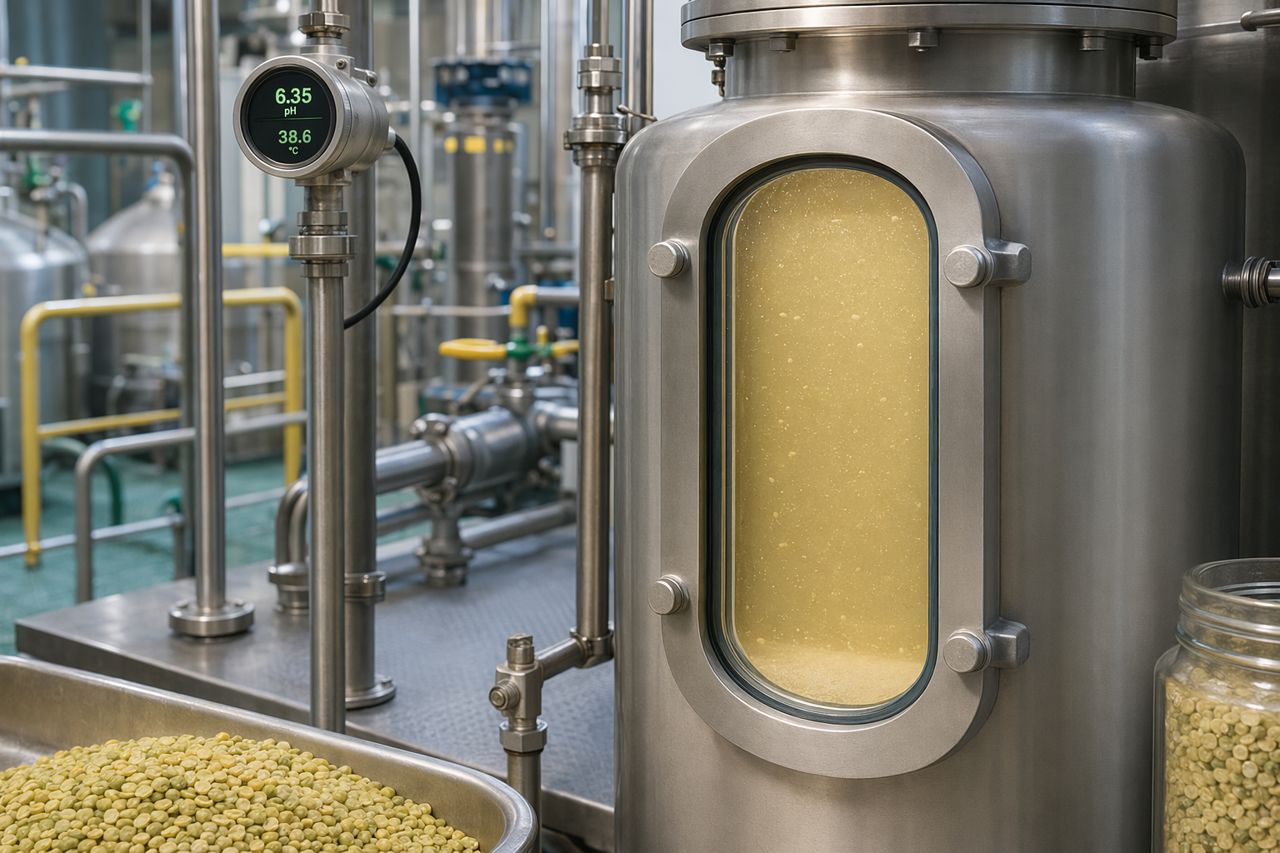
Pulse flours can form heavy, variable slurries. Enzyme treatment may help reduce problematic viscosity or improve dispersion, depending on substrate profile and process conditions.
The plant benefit is straightforward: more stable mixing, easier pumping, fewer flow restrictions, and better control before separation.
Extraction and solubilization behavior
Protein recovery depends on how well the process releases target fractions while controlling non-protein material. Enzyme selection can be used to influence cell-wall-associated material, starch/fiber interactions, or protein accessibility.
The target is not over-processing. The target is useful release with less downstream penalty.
Solid-liquid separation
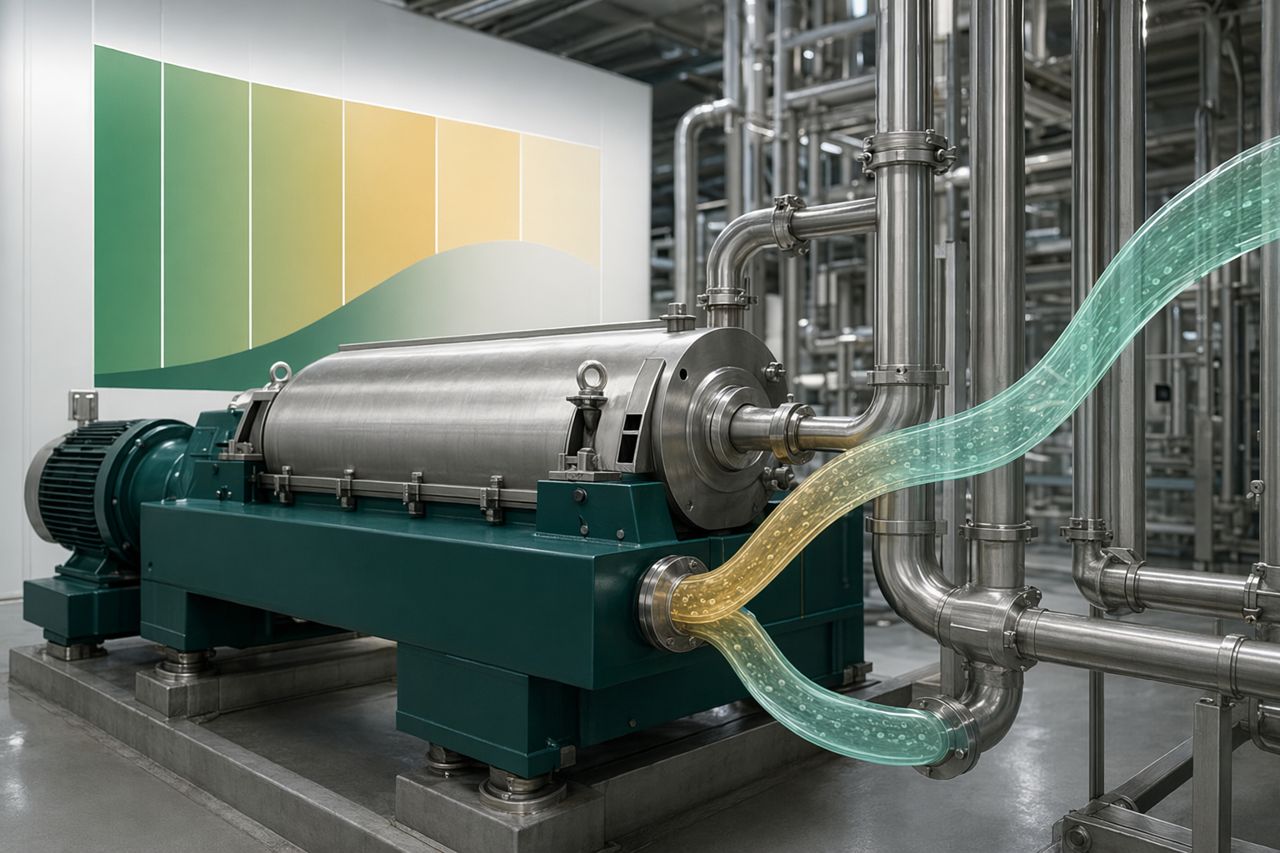
When slurry rheology is unstable, decanters, centrifuges, and screens can become bottlenecks. Enzymes may improve separation behavior by modifying non-protein components that hold water, trap fines, or increase suspended solids load.
For plant managers, this can mean steadier equipment loading, cleaner phase definition, and fewer unplanned adjustments during production.
Filtration and membrane-side pressure control
Downstream clarification and membrane systems are sensitive to fine solids, viscosity, and fouling tendency. Enzyme programs can be evaluated for their impact on feed behavior before the most sensitive equipment sees the stream.
The objective is to protect throughput and cleaning intervals while maintaining product requirements.
A supplier approach for predictable plant trials
Hilum Process Co. does not start with a one-size recommendation. We start with your process map.
A practical evaluation usually includes:
- Process intake — raw pulse type, flour preparation, extraction conditions, separation equipment, current bottlenecks, and target product profile.
- Enzyme shortlist — a focused recommendation based on the likely constraint, not a broad catalog dump.
- Bench or pilot plan — trial structure aligned with your available sampling points and quality checks.
- Plant trial support — dosing approach, addition point guidance, handling notes, and operational observations to capture.
- Supply alignment — packaging, lead time, documentation, and repeat order planning once the trial direction is clear.
What plant teams usually measure
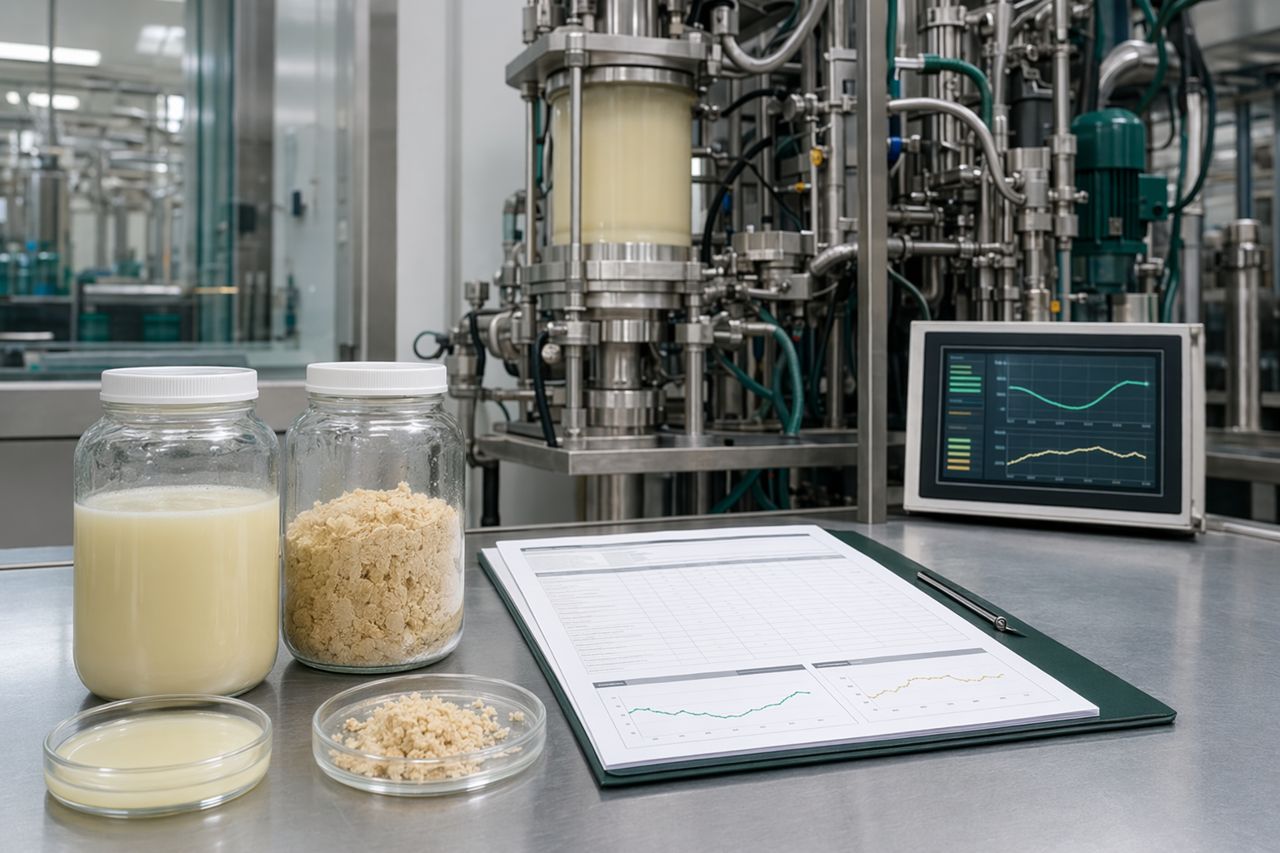
We keep evaluation tied to metrics your operations, process engineering, and quality teams already understand.
Common trial indicators include:
- Slurry viscosity trend
- Pumpability and mixing behavior
- Decanter or centrifuge load stability
- Solids distribution between streams
- Protein recovery and purity movement
- Filtration rate or pressure trend
- Membrane feed consistency
- Cleaning frequency observations
- Production downtime linked to fouling, plugging, or poor separation
The best enzyme program is the one your team can verify under your own operating conditions.
Built for pea, lentil, and chickpea isolate operations
Pulse protein isolate production shares core separation principles, but each pulse behaves differently.
Pea protein processing
Pea streams often bring a combination of starch, fiber, and protein fractionation challenges. Enzyme use may be evaluated where slurry viscosity, extraction efficiency, or separation stability limits throughput.
Lentil protein processing
Lentil systems can show variability in hydration behavior and fine solids handling. A focused enzyme trial can help determine whether stream conditioning improves downstream separation and clarification.
Chickpea protein processing
Chickpea processing may require careful attention to slurry body, non-protein solids, and oil/fiber interactions. Enzyme selection should be conservative, process-specific, and measured against final product requirements.
Documentation and supply expectations
Industrial enzyme sourcing requires more than a sample bottle. Hilum Process Co. supports B2B buyers with the information needed for purchasing, handling, and internal review.
Available support may include:
- Product specification guidance
- Safety and handling documentation
- Lot and packaging information
- Application notes for process evaluation
- Trial planning support for plant and pilot teams
- Quote support for recurring production supply
Why plant managers work with Hilum Process Co.
You need an enzyme supplier that understands the difference between a promising bench result and a stable production step.
Hilum Process Co. is direct, practical, and process-led. We help teams narrow the enzyme choice, define the trial, and connect results to the bottlenecks that matter: slurry behavior, separation efficiency, yield stability, cleaning burden, and downtime reduction.
No inflated claims. No abstract enzyme talk. Just a structured route from process problem to supply decision.
Request a quote for pulse protein enzyme supply
Tell us what pulse crop you run, where the bottleneck appears, and what trial scale you are planning. Hilum Process Co. will respond with a practical enzyme sourcing path for your plant.
Use the on-site request a quote form to start the discussion. Include any available details on raw material, process flow, pH and temperature range, separation equipment, target product profile, and current operating constraint.